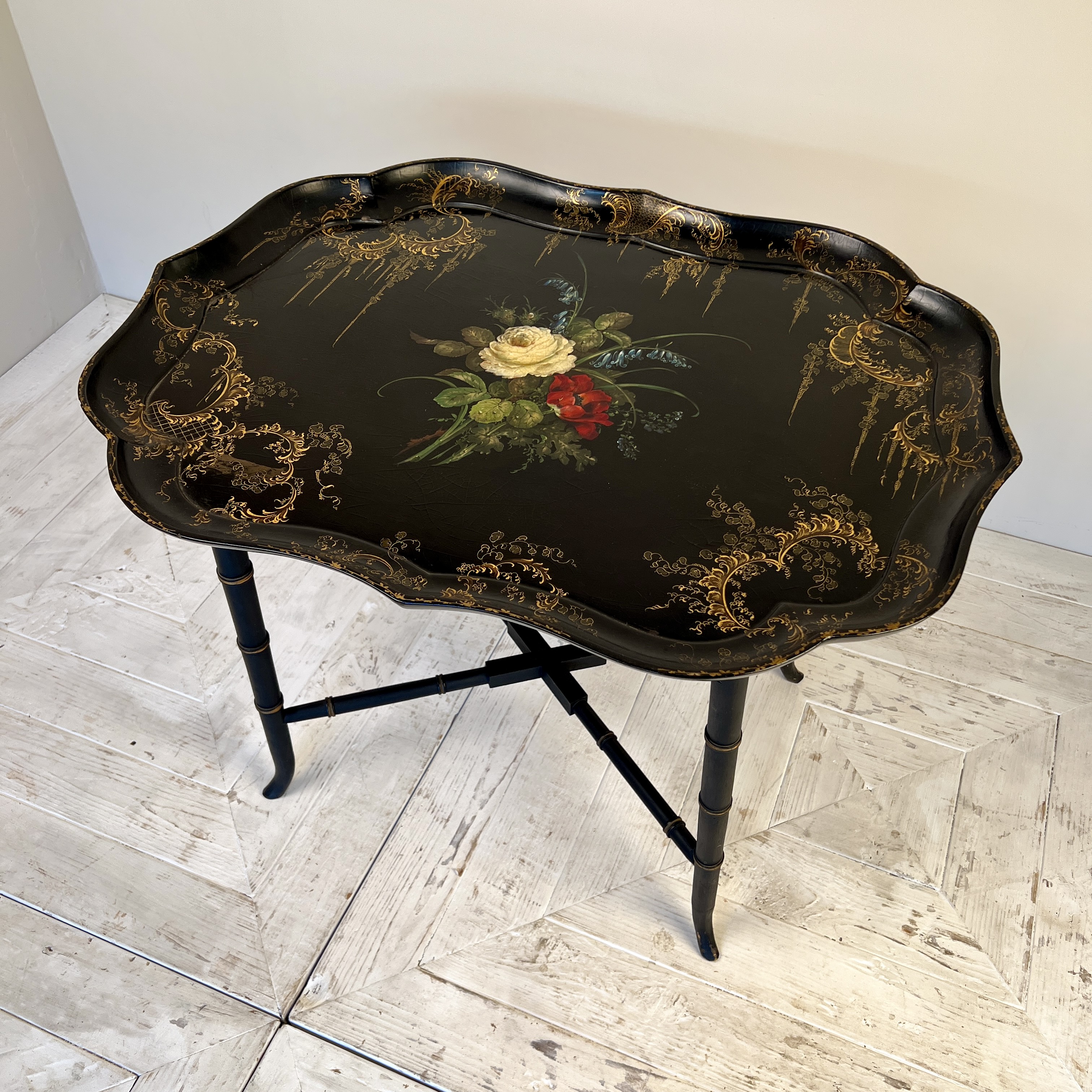
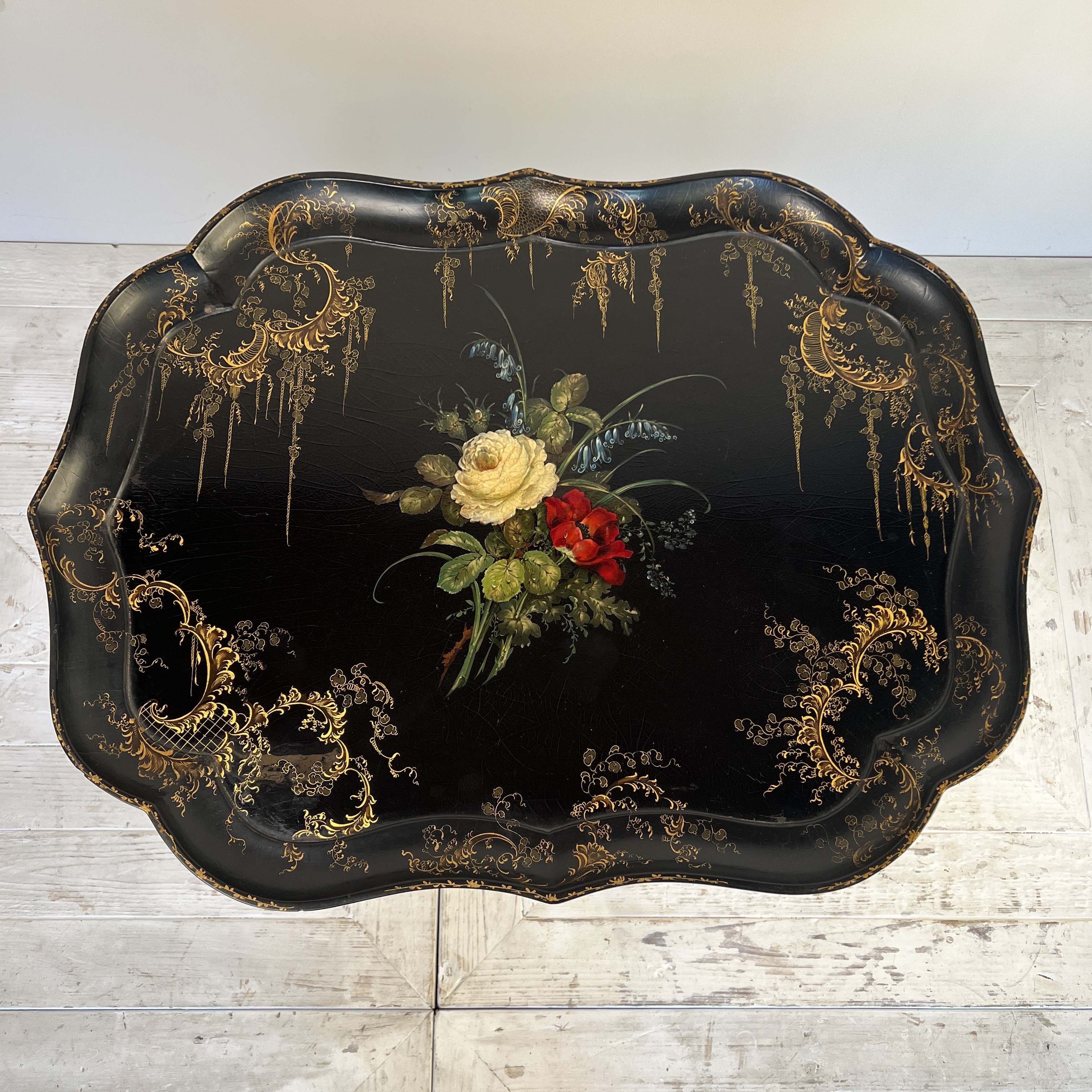

A Regency Japanned Papier-Mache Tray Table By Jennens And Bettridge
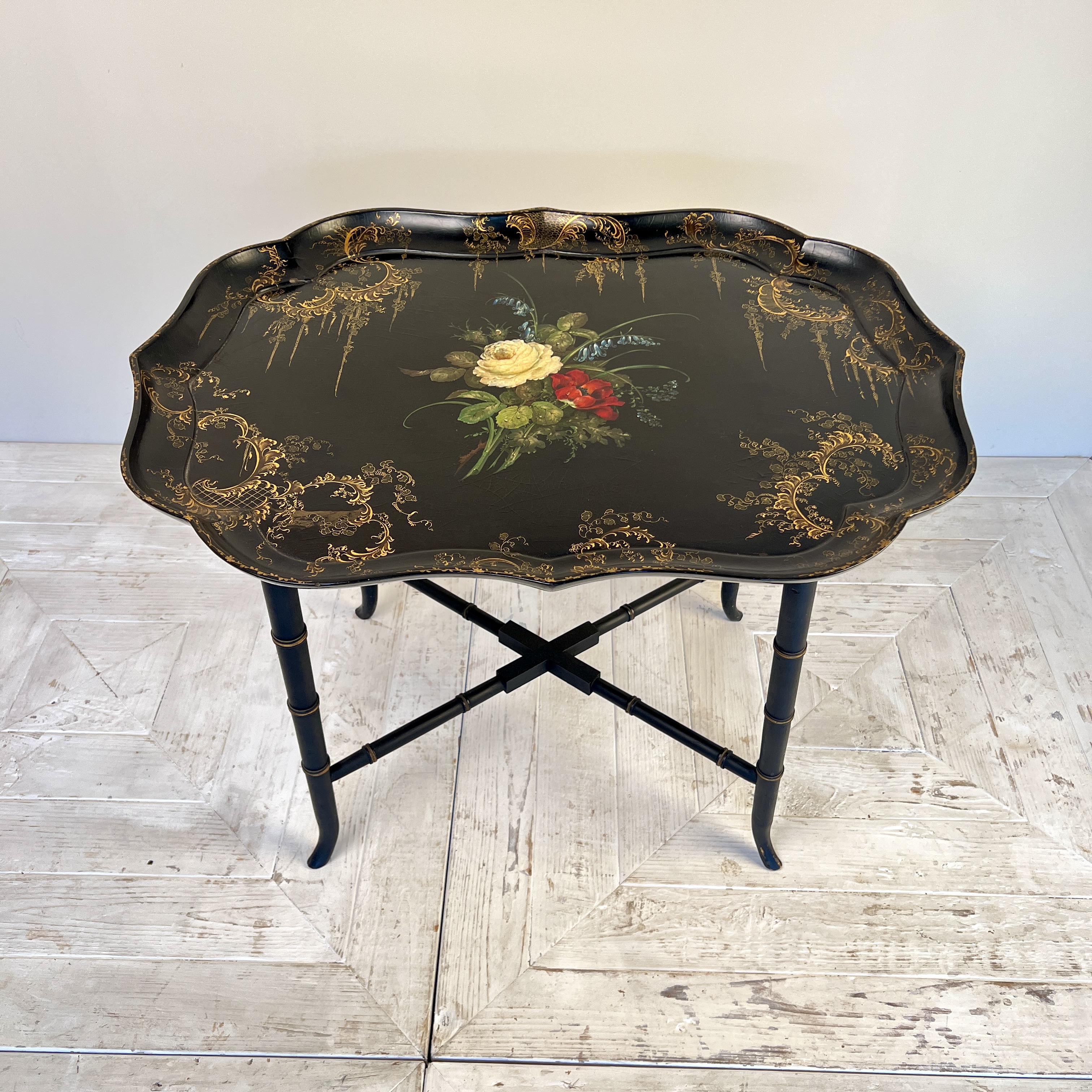
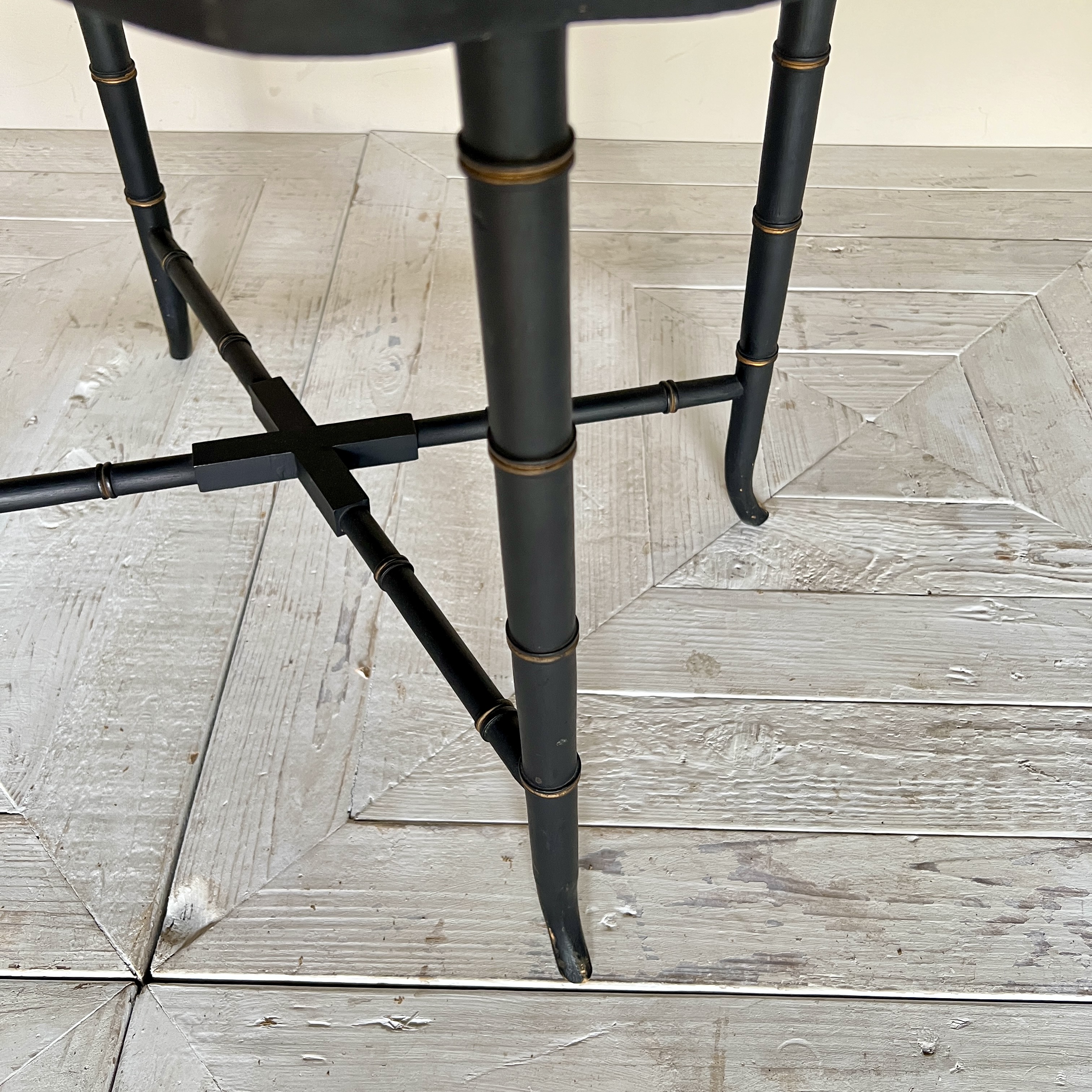
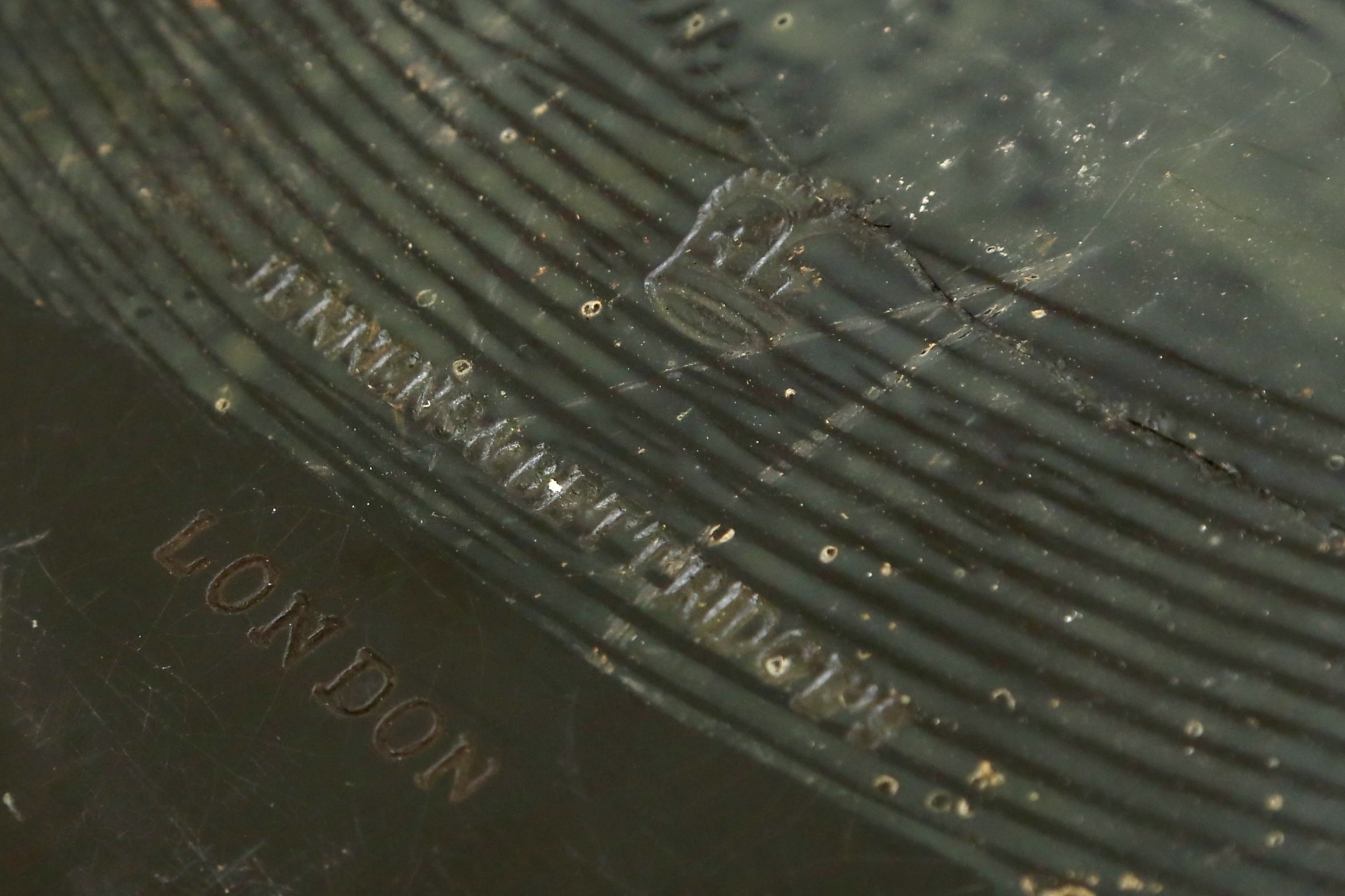
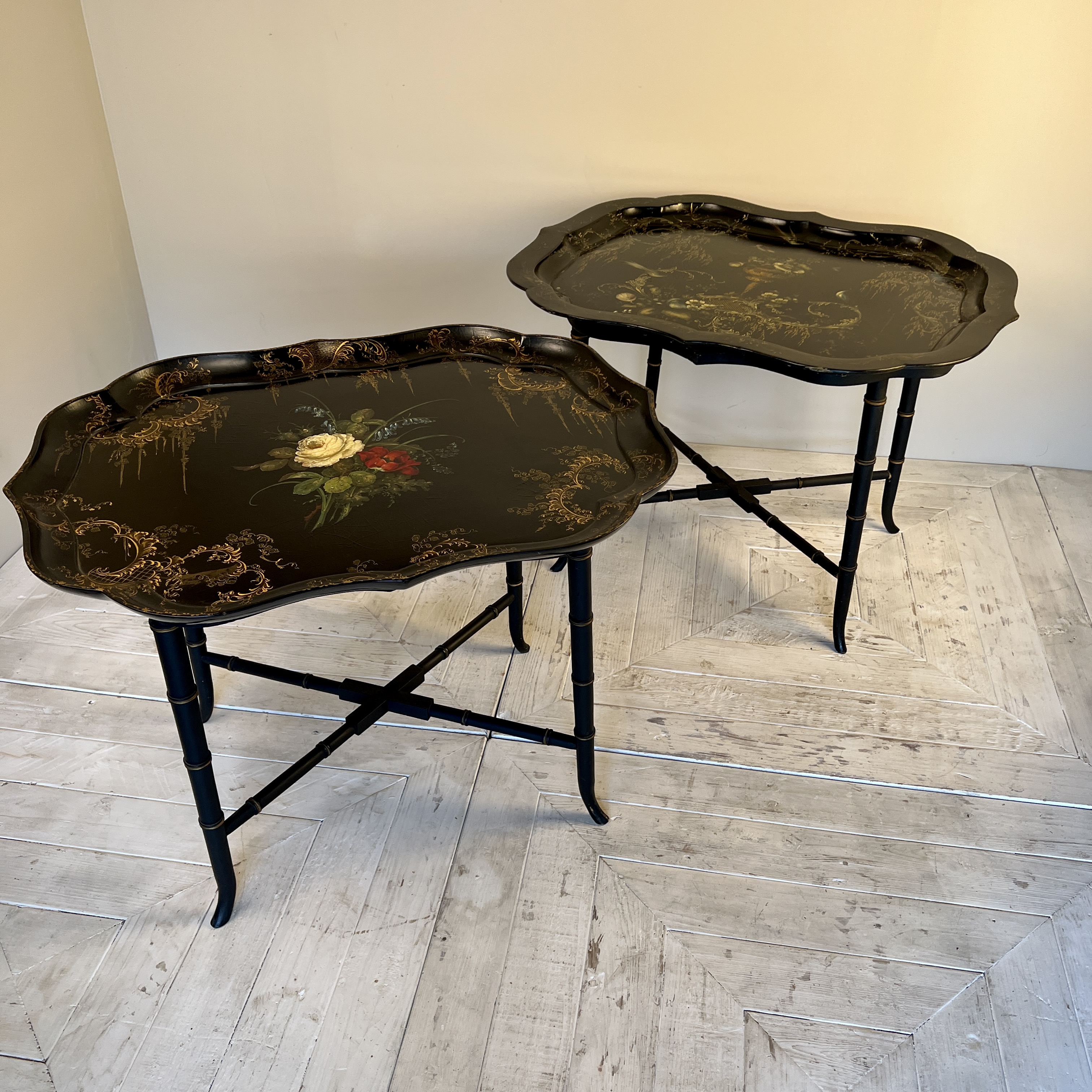
A Regency Japanned Papier-Mache Tray by Jennens and Bettridge, London. Of scalloped form decorated with a central hand painted floral bouquet surrounded by stylised foliate decoration. Standing on a later painted faux bamboo x-stretchered table. Dimensions: 79cm W x 60cm D x 57cm H Please note that the last few photos show another table we have for sale separately by Henry Clay of London which came from the same home.
The story of Jennens & Bettridge, a partnership between Theodore Hyla Jennens and John Bettridge, really begins with Henry Clay who started his Papier-Mache empire in Birmingham in the 1770’s. Clay expanded his business from Birmingham to London around 1785 trading from 18 King St, Covent Garden, though production continued in Birmingham until at least 1801.
He had been reported in 1781 as producing ‘Several pieces of superb furniture which now adorn the royal residences’ and King George III seemed happy in expressing his utmost approbation. In 1792 he claimed the title of ‘Japanner to His Majesty’ and by 1803 was incorporating in his headed invoices the words ‘Japanner in ordinary to His Majesty and to His Royal Highness the Princes of Wales’. Clay died in 1812 reputably worth £80,000, all made from his papier mâché manufactures. The business was however continued in London at his King St address until 1822, Clay’s patent had expired in 1802 however, and a number of rival producers set up including Jennens & Bettridge who opened up in 1816 in Henry Clay’s former Birmingham works. In 1825 they took out a patent for ‘ornamenting papier-mâché with pearl shell’ and this technique together with painted decoration and gilding provided a brilliant effect because of the iridescent quality of the mother-of-pearl. The quality of their work was quickly recognised and by 1825 they could claim to be ‘Japanners in Ordinary to His Majesty’. Royal commissions were received from not only by George IV, but also by William IV and later, Queen Victoria. Initially the bulk of their production was trays and other small wares but by 1839 they were producing larger items and in that year supplied Buckingham Palace with two folding screens. The business reached its peak in the early 1850s when they exhibited at the 1851 Great Exhibition and the opened branches in New York and Paris.