





A Victorian Japanned and Inlaid Papier Mache Slipper Chair
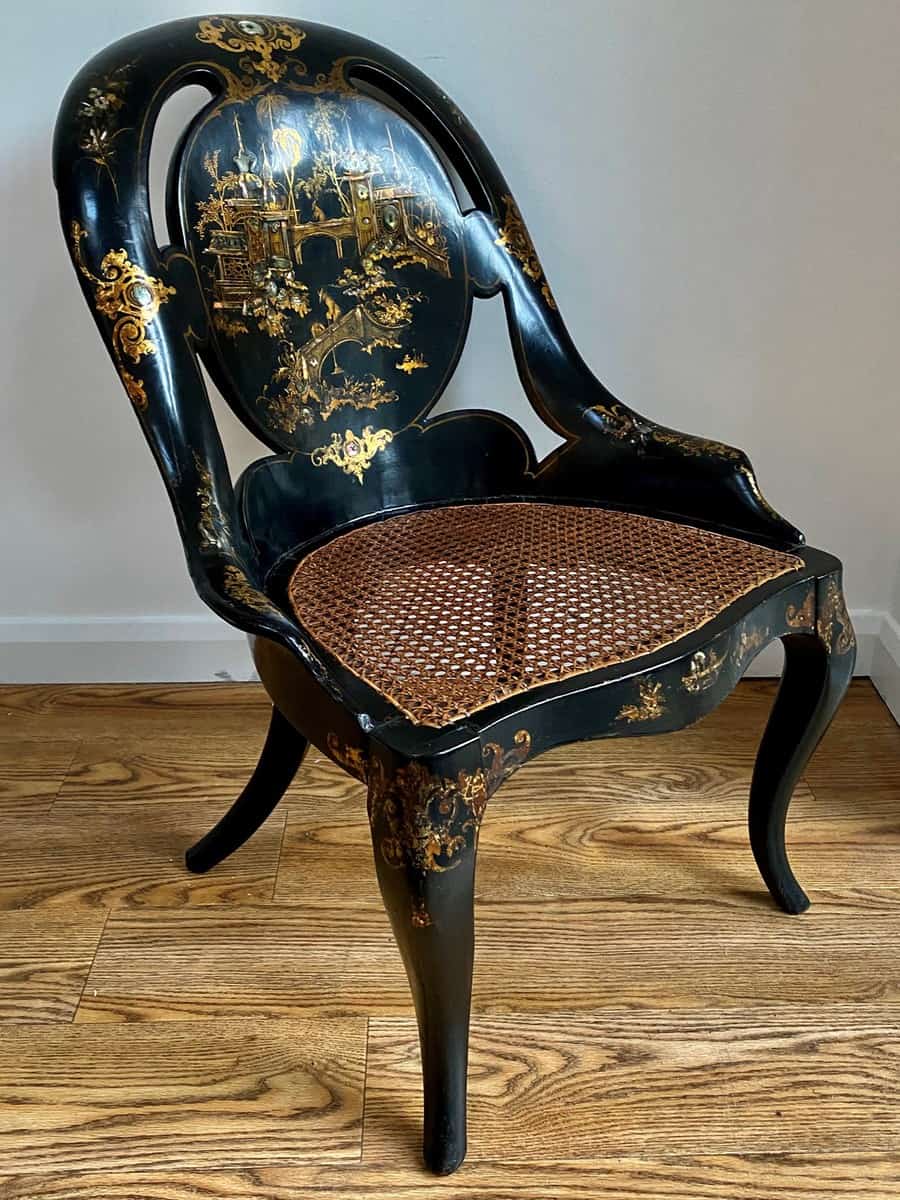
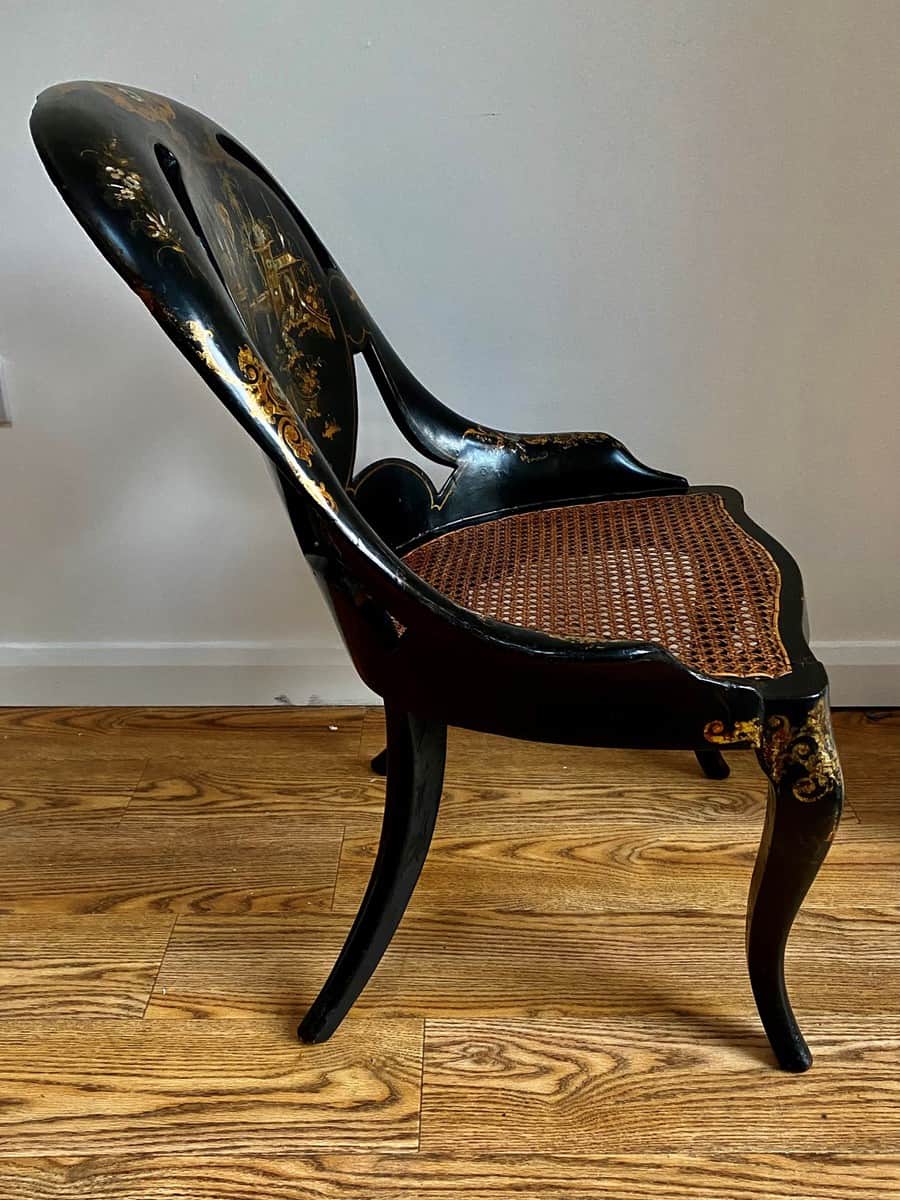
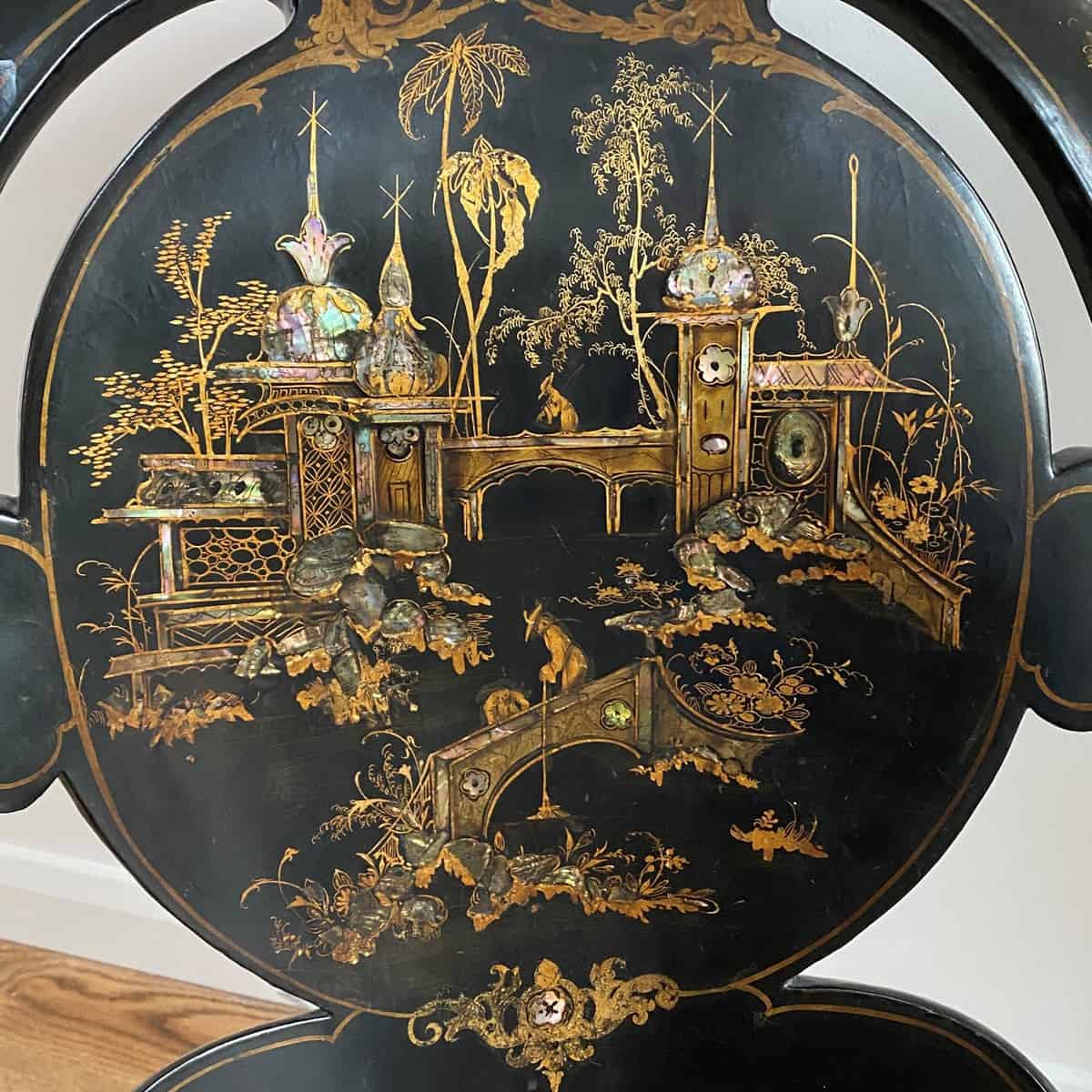
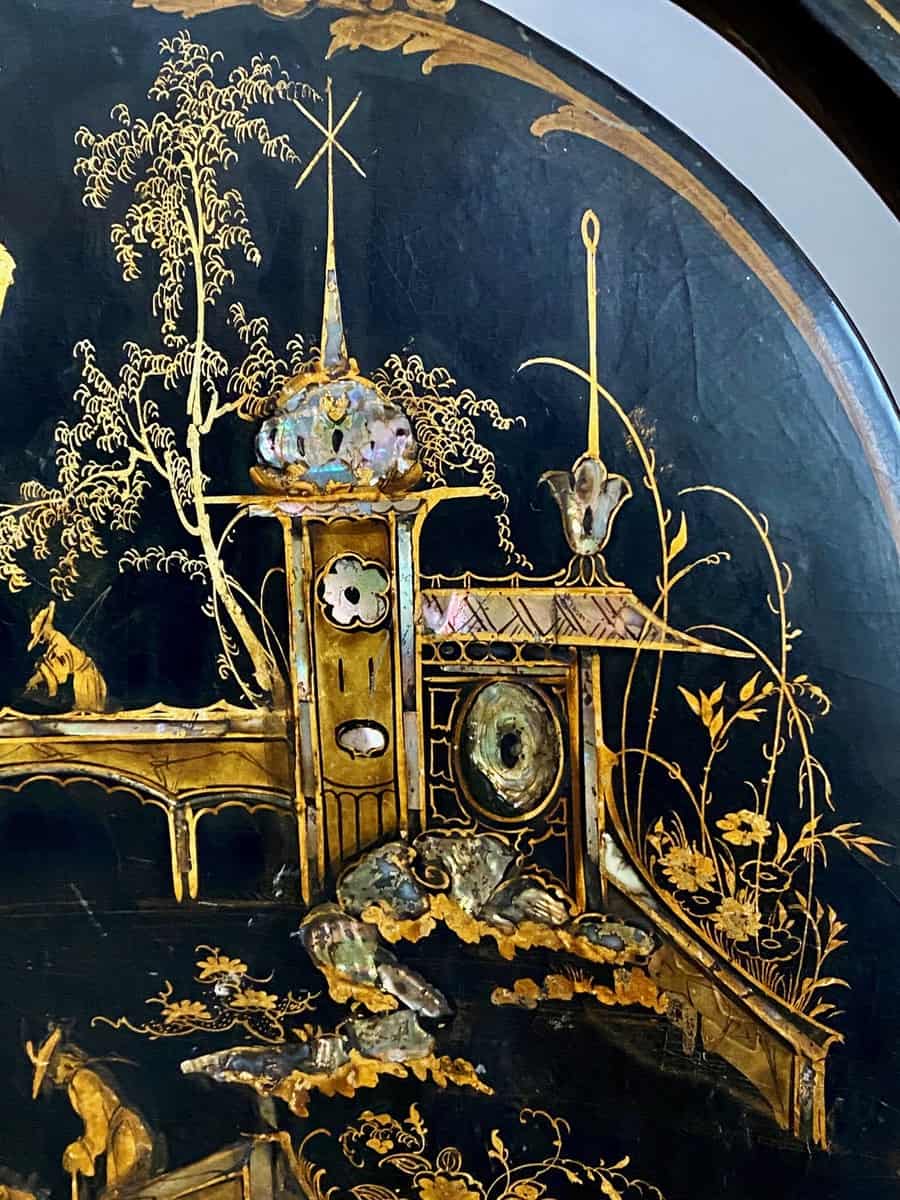
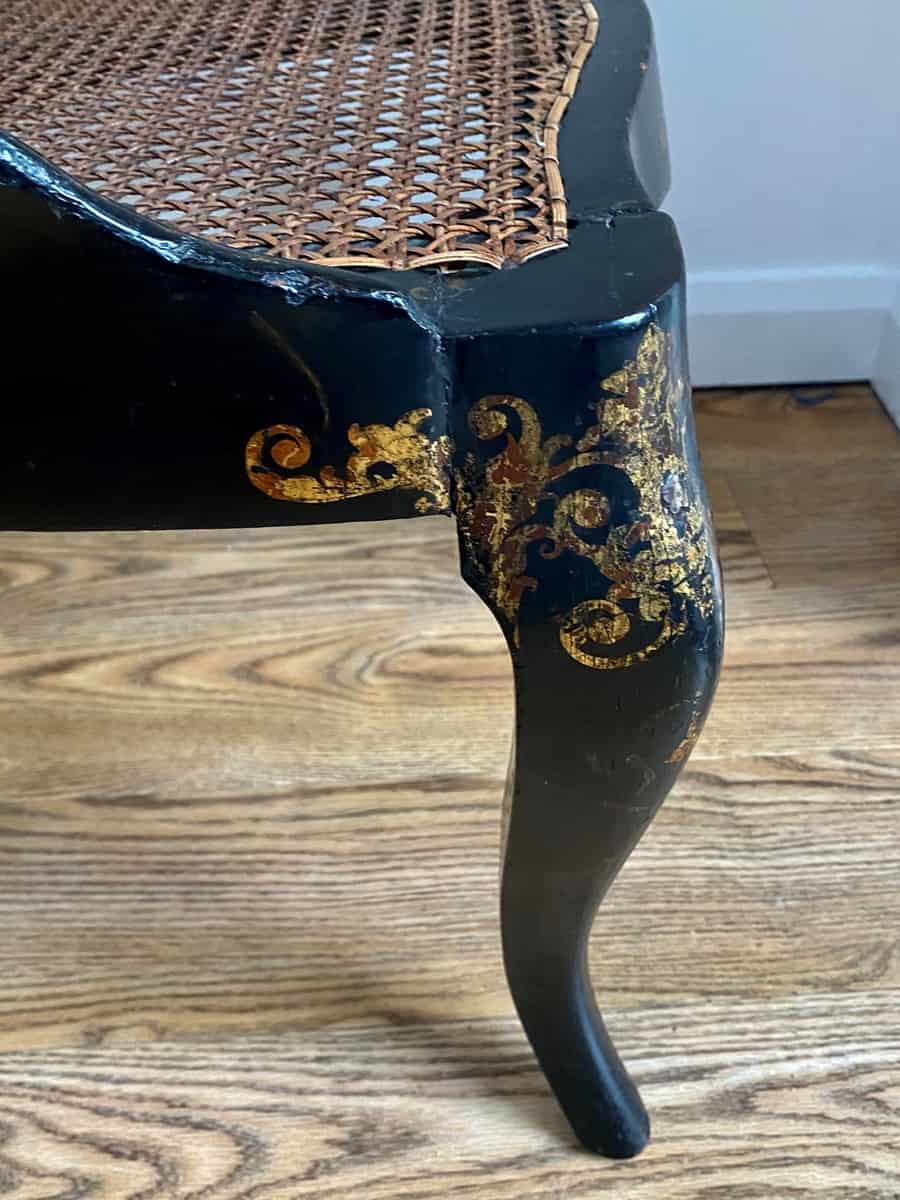
A good example of a Victorian Japanned and Inlaid Papier Mache Caned Slipper Chair possibly Jennens and Bettridge The pierced slipper back of scalloped form is beautifully gilded and inlaid with Mother-of-Pearl. Decorated with oriental scenes of pergodas, bridges, temples, Palm and Eucalyptus trees. The seat having a gentle serpentine front rail, caned pad, attractive cabriole legs to the front and sweeping sabre legs to the rear. Condition is consistent with its age and use. Nibbles to the top edge of the back and and sides which in our opinion adds to its charm. The caned seat is sound and strong. A really lovely, decorative piece of mid Victorian furniture. Dimensions: 85cm H x 57W x 67cm D. Seat height is 40cm.
Papier Mache has a long and varied history, starting around 1725 in Europe, gilded papier-mâché began to appear as a low-cost alternative to similarly treated plaster or carved wood in architecture. Henry Clay of Birmingham, England, patented a process for treating laminated sheets of paper with linseed oil to produce waterproof panels in 1772. These sheets were used for building coach door panels as well as other structural uses. Theodore Jennens patented a process in 1847 for steaming and pressing these laminated sheets into various shapes, which were then used to manufacture trays, chair backs, and structural panels.
Related products
-
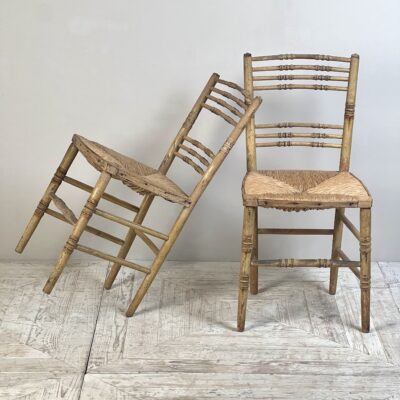
A Pair Of Painted Regency Faux Bamboo And Rush Seat Chairs
£695.00 -
Sale!
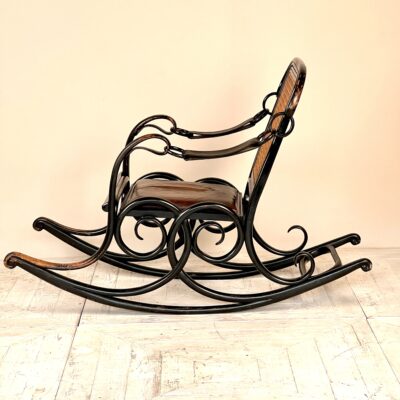
A Rare Thonet Number 3 Bentwood Rocking Chair
Original price was: £2,450.00.£1,750.00Current price is: £1,750.00. -
Sale!

‘Ateljee’ Leather And Ash Sofa And Armchair By Yrjö Kukkapuro For Haimi Finland
Original price was: £4,750.00.£3,950.00Current price is: £3,950.00.